Small Business Bookkeeping: Step-by-Step Guide
A practical step-by-step guide to doing bookkeeping for a small business. Learn how to organize accounts, record transactions, reconcile records, and review financial reports.

How to Do Bookkeeping for a Small Business
Small business bookkeeping is the organized process of recording, classifying, checking, and summarizing a business's financial transactions. A good bookkeeping routine helps a business owner understand what money came in, what money went out, what the business owns and owes, and how its financial position is changing.
The process does not have to be complicated. The key is to establish a consistent system and follow the same workflow each time. This guide walks through the process from setting up your bookkeeping foundation to recording transactions, reconciling accounts, handling common transaction types, reviewing financial reports, and maintaining records.
Why Small Business Bookkeeping Matters
Bookkeeping creates the financial record that a business uses to understand its day-to-day activity. Without organized records, it becomes harder to determine whether revenue was collected, expenses were recorded correctly, invoices remain outstanding, or account balances agree with financial records.
Bookkeeping also supports financial reporting. The records maintained during the bookkeeping process provide the underlying information used to prepare financial statements and evaluate business performance.
For a deeper introduction, see what bookkeeping means for a small business. It is also useful to understand the distinction between bookkeeping and broader accounting work through this guide to bookkeeping vs. accounting.
Accurate Records
Record transactions consistently so the business has a dependable history of its financial activity.
Financial Visibility
Organized records make it easier to review income, expenses, assets, liabilities, and business performance.
Better Decisions
Reliable financial information gives owners a stronger foundation for planning, budgeting, and managing cash.
Step 1: Choose a Bookkeeping Method and System
The first practical step is to decide how financial transactions will be recorded and where the accounting records will be maintained. A small business can use accounting software, spreadsheets, or another structured recordkeeping system, depending on its needs and the complexity of its transactions.
The important requirement is consistency. Your system should allow you to identify transactions, classify them appropriately, retain supporting documentation, and produce useful financial information.
Set up a central bookkeeping workspace
Keep financial records organized in one system rather than scattering information across unrelated spreadsheets, email messages, paper files, and personal accounts. Establish a consistent location for transaction records and supporting documents.
Separate business and personal activity
Business owners should keep business transactions distinguishable from personal spending. When business and personal activity is mixed together, reviewing transactions and determining the business impact of individual purchases becomes more difficult.
If you are evaluating accounting software, review the practical considerations covered in choosing small business bookkeeping software.
Step 2: Set Up Your Chart of Accounts
The chart of accounts is the organized list of accounts used to classify financial transactions. A well-structured chart of accounts helps you record transactions consistently and makes financial reports easier to understand.
The exact accounts a business needs depend on its activities. A service business may have a relatively simple structure, while a business with inventory, equipment, financing, payroll, or multiple revenue streams may need more detailed accounts.
| Account group | What it generally represents | Examples |
|---|---|---|
| Assets | Resources controlled by the business | Cash, accounts receivable, equipment |
| Liabilities | Amounts the business owes | Accounts payable, loans, other obligations |
| Equity | The owner's or owners' interest in the business | Owner contributions, retained amounts |
| Revenue | Income generated from business activities | Service revenue, product sales |
| Expenses | Costs associated with operating the business | Rent, utilities, supplies, professional services |
Avoid creating excessive accounts simply because a transaction exists. The goal is to create categories that provide useful information while remaining practical to maintain.
Step 3: Gather and Organize Source Documents
Before recording transactions, gather the documents and records that support them. These may include sales records, invoices, receipts, bills, payment records, bank activity, loan information, and other business documentation.
Source documents help you determine what happened, when it happened, how much was involved, and which account should be affected. They also provide a basis for reviewing transactions later when something does not appear to reconcile.
Bookkeeping document checklist
- Sales invoices and sales records
- Customer payment records
- Vendor bills and receipts
- Bank and financial account activity
- Credit card transaction records
- Loan and financing records
- Payroll-related records when applicable
- Records supporting business purchases and other financial activity
Step 4: Record Income and Sales Transactions
Record revenue transactions using a consistent process. The record should make it possible to identify the customer or source, transaction date, amount, relevant account, and whether the amount has been collected or remains outstanding.
Cash sales and collected revenue
When a customer pays at the time of a sale, record the transaction according to your bookkeeping system and the appropriate revenue account. The payment should also be reflected in the relevant cash or financial account.
Invoices and accounts receivable
When a business provides goods or services and allows the customer to pay later, the transaction needs to be tracked so the outstanding amount can be monitored. This creates a clear distinction between revenue that has been recorded and cash that has actually been collected.
Review outstanding customer balances regularly. A bookkeeping system should make it clear which invoices are open, which have been paid, and which payments need investigation or follow-up.
Step 5: Record Business Expenses
Record business expenses using the appropriate expense or balance-sheet account based on the nature of the transaction. The purpose is not simply to enter the amount. Each transaction should be classified consistently so that financial reports remain useful.
Review the transaction before categorizing it
Ask what the business purchased, why it was purchased, when the transaction occurred, how it was paid, and whether the transaction represents an expense or another type of financial activity.
Do not rely only on the payment description
Bank transaction descriptions can provide useful clues, but they may not contain enough information to determine the correct bookkeeping treatment. Supporting documentation should be reviewed when the nature of a transaction is unclear.
Step 6: Track Accounts Receivable
Accounts receivable represents amounts customers owe the business. If your business invoices customers rather than collecting payment immediately, tracking these balances is an important part of bookkeeping.
Maintain an accurate record of invoices issued, payments received, credits or adjustments when applicable, and remaining balances. The objective is to keep customer balances aligned with actual business activity.
Use a simple receivables review
- Review open customer invoices.
- Match received payments to the appropriate customer records.
- Investigate balances that do not appear correct.
- Follow up on outstanding amounts according to the business's normal collection process.
- Review the receivables balance against the general ledger or accounting records.
Step 7: Track Accounts Payable
Accounts payable represents amounts the business owes to vendors or other parties. Tracking bills before they are paid helps the business understand upcoming obligations and prevents unpaid transactions from being overlooked.
Record vendor bills consistently, identify their due dates, and match payments to the correct obligations. If a payment is entered without properly recording the underlying bill, the bookkeeping records may not clearly show what the business still owes.
Accounts payable should be reviewed regularly, particularly when the business has many vendors or recurring expenses. The goal is to maintain a clear connection between bills, payments, and outstanding balances.
Step 8: Reconcile Bank and Other Financial Accounts
Reconciliation is one of the most important quality-control steps in bookkeeping. It involves comparing the transactions and balance in the bookkeeping records with the corresponding financial account records and investigating differences.
A reconciliation can identify missing transactions, duplicate entries, incorrect amounts, timing differences, or other issues that require attention.
A practical reconciliation workflow
- Obtain the relevant account statement or transaction record.
- Compare recorded transactions with the external account activity.
- Match transactions that agree.
- Identify unmatched or unusual items.
- Investigate the reason for each difference.
- Record legitimate missing transactions or corrections.
- Complete the reconciliation and retain the supporting information.
Do not treat reconciliation as simply checking whether two ending balances look similar. The underlying transactions matter because an incorrect entry can produce a misleading balance.
For broader process guidance, see small business bookkeeping best practices and the small business bookkeeping checklist.
Step 9: Review the Accounting Equation
The accounting equation provides a fundamental framework for understanding the relationship between a business's resources, obligations, and equity. It is expressed as Assets = Liabilities + Equity.
This relationship helps explain why transactions affect multiple parts of the accounting records. It also provides an important conceptual foundation for understanding balance-sheet information.
You can explore the underlying concept in the accounting equation guide.
Step 10: Review Financial Statements
Bookkeeping becomes more useful when the recorded transactions are turned into financial information that can be reviewed. Financial statements help business owners understand revenue, expenses, assets, liabilities, equity, and cash-related activity.
| Report | Primary purpose | Questions it can help answer |
|---|---|---|
| Income statement | Summarizes revenue and expenses over a period | Did the business generate a profit or loss for the period? |
| Balance sheet | Shows assets, liabilities, and equity at a point in time | What does the business own and owe? |
| Cash flow statement | Shows changes in cash through operating, investing, and financing activities | How did cash change during the period? |
| Statement of changes in equity | Shows changes affecting equity | How did the owners' interest change? |
For an overview of the major reports, read the four main financial statements. You can also review financial statements explained for a broader understanding of their purpose and relationship.
Step 11: Establish a Bookkeeping Schedule
Good bookkeeping is easier to maintain when recurring work is assigned to a predictable schedule. Waiting until the end of a long period to process every transaction can make errors harder to identify and create a large backlog of work.
Daily or As Needed
Capture sales, purchases, payments, receipts, invoices, and other transactions as they occur or become available.
Weekly
Review recent transactions, organize supporting documents, monitor receivables and payables, and investigate unusual activity.
Monthly
Complete reconciliations, review account balances, examine financial statements, and investigate material or unusual changes.
The appropriate frequency depends on the volume and complexity of transactions. A business with frequent sales and payments may need more frequent processing than a business with relatively few transactions.
Step 12: Review and Correct Errors
Even a structured bookkeeping process can contain mistakes. The important practice is to identify errors, determine why they occurred, correct them appropriately, and improve the process when the same type of mistake is likely to recur.
Common bookkeeping errors to investigate
- Duplicate transactions
- Transactions recorded for the wrong amount
- Transactions assigned to the wrong account
- Missing income or expense transactions
- Payments matched to the wrong invoice or bill
- Unreconciled account differences
- Business and personal transactions mixed together
- Old or unexplained balances that remain unresolved
For additional guidance, review common accounting process mistakes and solutions.
How the Bookkeeping Workflow Fits Together
Small business bookkeeping works best as a connected workflow rather than a collection of isolated tasks. Source documents support transactions, transactions affect accounts, reconciliations test the records, and financial statements summarize the resulting information.
Capture
Collect invoices, receipts, payment records, statements, and other supporting documentation.
Record
Enter transactions and classify them in the appropriate accounts.
Reconcile
Compare bookkeeping records with external account activity and resolve differences.
Review
Examine account balances and financial reports for unusual activity or errors.
Cash Basis vs. Accrual Basis Bookkeeping
One important bookkeeping consideration is when transactions are recognized in the accounting records. Cash-basis and accrual-basis approaches differ in how they recognize income and expenses.
| Consideration | Cash basis | Accrual basis |
|---|---|---|
| Revenue recognition | Generally tied to when cash is received | Generally tied to when revenue is earned |
| Expense recognition | Generally tied to when cash is paid | Generally tied to when expenses are incurred |
| Accounts receivable | Typically less central to the basic cash-basis view | Used to track amounts customers owe |
| Accounts payable | Typically less central to the basic cash-basis view | Used to track amounts owed to vendors |
The appropriate accounting method can depend on the business and its circumstances. For U.S. businesses, accounting and tax treatment should be evaluated based on the specific situation rather than selecting a method solely because it appears simpler.
Bookkeeping for Different Types of Small Businesses
The basic workflow remains similar across industries, but the transactions that require attention can differ. A service business may focus heavily on customer invoices and professional expenses. A retailer may need more detailed inventory-related records. A construction business may need to track transactions by project or job. Restaurants may have substantial purchasing and payment activity.
The bookkeeping system should therefore reflect how the business actually operates. Categories that provide useful management information for one business may not be appropriate for another.
Service businesses
Focus on revenue by service, customer invoices, payment collection, contractor or professional expenses, and recurring operating costs.
Retail and e-commerce businesses
Pay particular attention to sales records, payment processing, inventory-related activity, returns, fees, and the relationship between sales records and financial account activity.
Professional services
Track client billing, collections, professional expenses, recurring subscriptions, and other costs associated with delivering services.
Project-based businesses
Consider whether revenue and expenses need to be tracked by project, customer, job, or another useful operational category.
When to Use Bookkeeping Software
Accounting software can help organize transactions, accounts, invoices, bills, reconciliations, and financial reports. The value comes from using the system consistently and maintaining appropriate review controls, not simply from having software available.
A business should evaluate software based on its transaction volume, reporting needs, workflow, integrations, user requirements, and ability to maintain accurate records. The simplest system that meets the business's needs is often easier to maintain than an unnecessarily complicated setup.
If you are comparing options, start with how to choose small business bookkeeping software rather than selecting a system based only on the number of features it advertises.
When to Handle Bookkeeping Yourself vs. Hire Help
Some owners manage their bookkeeping themselves, particularly when transaction volume and accounting complexity are manageable. Others use an employee, bookkeeper, or outsourced service as the business grows or the bookkeeping workload becomes more demanding.
The right choice depends on the business's needs, the owner's available time, transaction complexity, desired reporting quality, and ability to maintain a consistent process.
For a practical comparison, see in-house vs. outsourced bookkeeping and hire a bookkeeper vs. outsourcing.
Small Business Bookkeeping Checklist
Use this checklist as a practical review of the overall bookkeeping process. It is more useful when treated as a recurring operating routine rather than a one-time setup exercise.
- Choose and configure a bookkeeping system.
- Establish an appropriate chart of accounts.
- Keep business transactions distinguishable from personal transactions.
- Collect and organize supporting documents.
- Record sales and other income.
- Record business expenses.
- Track customer invoices and outstanding receivables when applicable.
- Track vendor bills and outstanding payables when applicable.
- Reconcile bank and other relevant financial accounts.
- Review unusual, duplicate, missing, or misclassified transactions.
- Review financial statements regularly.
- Maintain an organized recordkeeping process.
Common Bookkeeping Mistakes to Avoid
Most bookkeeping problems are easier to prevent than to correct after records have accumulated. Establishing a consistent workflow, documenting transactions, and performing regular reconciliations can reduce the risk of unresolved issues.
Waiting Too Long
Allowing transactions to accumulate can make it harder to remember what individual payments and purchases represent.
Skipping Reconciliation
Unreconciled accounts can allow missing, duplicated, or incorrectly recorded transactions to remain unnoticed.
Overcomplicating Accounts
Too many categories can make bookkeeping harder to maintain without adding useful financial insight.
Ignoring Old Balances
Old receivable, payable, or reconciliation balances should be investigated rather than carried forward without explanation.
How to Make Small Business Bookkeeping More Efficient
Efficiency comes from reducing unnecessary manual work while preserving review and control. Standardized transaction categories, organized documentation, recurring reconciliation routines, and consistent reporting can make bookkeeping easier to manage.
Automation can also help with repetitive accounting processes when the underlying workflow is well designed. However, automation does not eliminate the need to review transactions and investigate exceptions.
For a broader look at improving accounting workflows, read accounting process automation explained and accounting automation best practices.
Frequently Asked Questions
Can a small business owner do their own bookkeeping?
Yes. A business owner can manage bookkeeping when the transaction volume and complexity are manageable and the owner can maintain a consistent process for recording, reconciling, reviewing, and organizing financial records. As complexity grows, professional bookkeeping support may become useful.
What should I record in small business bookkeeping?
Record business income, expenses, customer invoices and payments, vendor bills and payments, bank and financial account activity, and other transactions that affect the business's financial records. Supporting documentation should be retained and organized with the bookkeeping process.
How often should a small business do bookkeeping?
The appropriate schedule depends on transaction volume and business complexity. Transactions can be captured as they occur, while reviews and reconciliations can be performed on a recurring schedule. Monthly financial review is a useful part of an ongoing bookkeeping routine.
What is the difference between bookkeeping and accounting?
Bookkeeping focuses primarily on recording, organizing, classifying, and reconciling financial transactions. Accounting is broader and can include interpreting financial information, preparing reports, analysis, planning, and other financial activities.
Do I need bookkeeping software for a small business?
Not every business has identical requirements. A small business should choose a recordkeeping system that can handle its transaction volume, reporting needs, and workflow consistently. Accounting software can provide useful structure, but accurate bookkeeping still depends on proper setup and review.
Summary and Next Steps
Doing bookkeeping for a small business is fundamentally a process of keeping financial records complete, organized, consistent, and reviewable. The workflow starts with a suitable bookkeeping system and chart of accounts, then moves through source-document collection, transaction recording, receivables and payables tracking, reconciliation, error review, and financial reporting.
The most important lesson is that bookkeeping is not simply data entry. The quality of the process depends on accurate classification, supporting documentation, regular reconciliation, and thoughtful review of the resulting financial information.
Your next practical step is to establish a repeatable bookkeeping routine and use it consistently. If your existing records are difficult to maintain, begin by organizing the chart of accounts, gathering missing source documents, reconciling financial accounts, and then creating a recurring review schedule.
For a ready-to-use recurring process, keep the small business bookkeeping checklist alongside your bookkeeping workflow and review it regularly.
Written by
Ashraful Haque
Process Improvement Consultant & Operations Specialist with expertise in Lean Six Sigma, financial workflows, and business intelligence systems.
Comments
Leave a comment
Comments are moderated and will appear after approval.
Recommended Products

QuickBooks Online Survival Guide for Beginners - 2026 Updated Edition: Step-by-Step Guide to Mastering QuickBooks Online, Fixing Common Errors, ... Accounting Experience for Small Business.
A step-by-step beginner's guide to mastering QuickBooks Online, fixing common errors, and running small-business accounting with confidence.
Check Price
The Secret Language of Financial Reports: The Back Stories That Can Enhance Your Investment Decisions
A practical guide to reading between the lines of financial reports so you can make sharper, better-informed investment decisions.
Check Price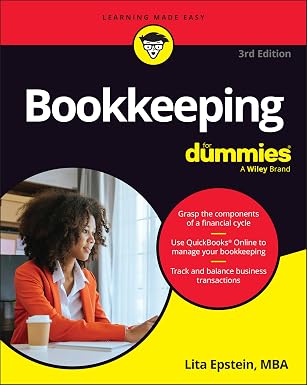
Bookkeeping For Dummies (For Dummies: Learning Made Easy)
A friendly, practical introduction to bookkeeping fundamentals - ledgers, journal entries, and everyday financial record-keeping made approachable for beginners.
Check PriceRelated Articles
SafetyStock IQ — Statistical Buffer & Reorder Engine
Downloadable operational utility that ingests CSV / Excel order histories and calculates dynamic safety stock buffers, lead-time variance adjustments, and service level trade-offs.
Read Article →Accounts Receivable Days (DSO) Calculator
Calculate Accounts Receivable Days (DSO), average accounts receivable, and collection performance with this interactive calculator.
Read Article →FreightGuard — Automated Carrier Invoice & Rate Auditor
Connect FedEx, UPS, DHL, and LTL carrier API billing feeds. Automatically matches billed freight against negotiated contract rate cards to flag discrepancy claims.
Read Article →