Hire an In-House Bookkeeper vs Outsourcing: Complete Guide
Deciding between hiring a bookkeeper or outsourcing is a pivotal moment for any growing business. This guide compares both models to help you optimize your financial operations.
Choosing the Right Model: Hire Bookkeeper vs Outsource
Deciding whether to hire a bookkeeper or outsource your financial tasks is one of the most significant operational decisions a business owner will face. BrainyFlavors is dedicated to providing the practical knowledge you need to navigate these complex business choices with confidence. This guide explores the fundamental differences between these two models to help you reduce costs and improve financial accuracy. Our goal is to ensure you finish this article feeling more informed about your business operations than when you started.
To understand which path is right for you, it is helpful to first review our Small Business Bookkeeping Beginners Guide. This foundation ensures you are evaluating your needs based on a clear understanding of standard financial processes.
The Case for Hiring an In-House Bookkeeper
Hiring an in-house bookkeeper means bringing a dedicated professional onto your payroll to manage day-to-day financial transactions. This model offers the highest level of direct control and immediate access to your data. For many organizations, having a physical presence in the office helps with communication and allows the bookkeeper to take on additional administrative duties.
Primary Advantages
- Immediate Accessibility: You have a dedicated person available for real-time questions.
- Deep Integration: The employee learns your specific company culture and internal workflows intimately.
- Versatility: In-house staff can often assist with other office management tasks.
Potential Drawbacks
- Higher Overhead: You must cover payroll taxes, benefits, and office space.
- Training Requirements: The burden of continuous professional development falls on the employer.
- Single Point of Failure: If that employee leaves or takes leave, your financial tracking may stall.
The Case for Outsourced Bookkeeping
Outsourcing involves hiring an external firm or professional service to manage your books remotely. This model has gained significant popularity due to its scalability and the specialized expertise it provides without the cost of a full-time hire. It is often a primary strategy for businesses looking to implement 7 key principles of business improvement by reducing waste.
Primary Advantages
- Cost Efficiency: You generally pay only for the hours or services you actually need.
- Expertise: You gain access to a team of experts with diverse industry knowledge.
- Advanced Technology: Firms often use modern software and AI automation that a single hire might not know.
Potential Drawbacks
- Less Physical Presence: Communication is primarily digital or scheduled.
- Less Control: You may have less direct oversight over the specific daily schedule of the work.
- Standardized Processes: External firms may require you to adapt to their workflow rather than vice versa.
Side-by-Side Comparison: In-House vs. Outsource
To make the best decision between hiring and outsourcing, it is essential to compare the key factors that impact your business operations. Use the following comparison table to evaluate which model aligns with your current strategic goals.
| Feature | In-House Bookkeeper | Outsourced Service |
|---|---|---|
| Cost Structure | Fixed Salary + Benefits | Variable or Flat Fee |
| Access to Data | Immediate/Physical | Cloud-Based/On-Demand |
| Scalability | Limited by Employee Hours | Highly Scalable |
| Expertise Level | Depends on Individual | Access to a Team |
| Software Costs | Paid by Employer | Often Included in Fee |
For more details on financial distinctions, read our guide on Bookkeeping vs Accounting: What's the Difference?.
Decision Factors for Your Small Business
There is no "one-size-fits-all" answer to the hire vs outsource debate. Your choice should be based on data-driven decisions rather than intuition. Consider these three critical factors to determine the best path for your organization's long-term growth.
1. Transaction Volume
If your business processes hundreds of invoices weekly, a dedicated in-house professional might be necessary. For lower volumes, outsourcing is typically more cost-effective.
2. Budget Flexibility
Small businesses with tight cash flow often prefer the lower barrier to entry of outsourcing. Firms with stable revenue may prioritize the long-term value of a loyal employee.
3. Future Growth Plans
If you plan to scale rapidly, an outsourced firm can easily expand their services to match your needs. If your operations are stable, an in-house hire provides consistent support.
Recommended Professional Development Resources
Effective decision-making is a skill that can be developed over time. We recommend these curated resources to help you refine your leadership and strategic thinking.
Strategic Thinking
How Successful People Think by John C. Maxwell explores mental frameworks that help you solve complex business problems effectively.
Competency Development
FYI: For Your Improvement by Michael M. Lombardo is an essential guide for professionals looking to develop the core competencies needed for high-level leadership.
Common Mistakes in the Hiring Process
Avoiding common errors can save your business thousands of dollars in lost productivity. Being aware of these pitfalls is a best practice for any manager or owner.
- Underestimating Total Cost: Forgetting to factor in overhead like insurance and hardware when hiring.
- Hiring for the Wrong Skill Level: Hiring a cheap bookkeeper to do the work of a certified accountant.
- Poorly Defined Scope: Failing to set clear expectations for what the outsourced firm will actually handle.
- Lack of Oversight: Assuming that because you outsourced, you no longer need to review your financial reports.
Frequently Asked Questions
These answers clarify common concerns when deciding between hiring and outsourcing for your business operations.
Which option is generally cheaper for a startup?
Outsourcing is usually much cheaper for startups as it eliminates the need for full-time salary and benefits. You can start with just a few hours a month and grow from there.
Can I switch from an outsourced firm to an in-house hire later?
Yes, many businesses start with outsourcing and bring the function in-house once the transaction volume justifies a full-time salary.
Does outsourcing compromise data security?
Reputable firms use high-level encryption and secure cloud platforms that are often more protected than a standard office computer.
What is the main benefit of having a bookkeeper in the office?
The primary benefit is immediate response time and the ability for them to handle physical tasks like filing and mail management.
Conclusion and Next Steps
Choosing between hiring a bookkeeper and outsourcing is a strategic move toward operational excellence. Whether you prioritize the intimate knowledge of an in-house hire or the cost-effective scalability of an outsourced team, the most important step is to begin tracking your data accurately.
To begin your journey toward better financial management, consider these immediate steps:
- Calculate your current monthly transaction volume to determine the level of support you need.
- Review our Guide to Small Business Bookkeeping Costs to set a realistic budget.
- If you need expert guidance, explore our Business Improvement Consulting Services for customized advice.
- Evaluate your current accounting software to see if it supports remote collaboration.
Written by
Ashraful Haque
Process Improvement Consultant & Operations Specialist with expertise in Lean Six Sigma, financial workflows, and business intelligence systems.
Comments
Leave a comment
Comments are moderated and will appear after approval.
Recommended Products

QuickBooks Online Survival Guide for Beginners - 2026 Updated Edition: Step-by-Step Guide to Mastering QuickBooks Online, Fixing Common Errors, ... Accounting Experience for Small Business.
A step-by-step beginner's guide to mastering QuickBooks Online, fixing common errors, and running small-business accounting with confidence.
Check Price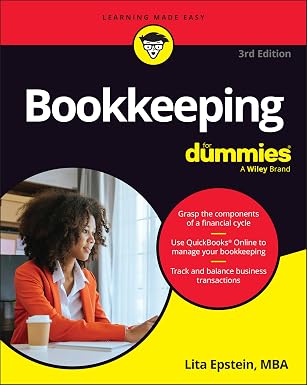
Bookkeeping For Dummies (For Dummies: Learning Made Easy)
A friendly, practical introduction to bookkeeping fundamentals - ledgers, journal entries, and everyday financial record-keeping made approachable for beginners.
Check Price
Paycheck to Billionaire: Master Financial Freedom, Smart Investing & Cost Management Board Game, Educational Play, Perfect for Boys and Girls Ages 8+, Adults and Family
An educational board game that turns financial concepts into interactive play, making conversations about investing, spending, and money management more engaging.
Check PriceRelated Articles
Break-Even Point Calculator
revenue you need to generate to cover your fixed and variable costs. You can also enter a target profit to determine the sales volume required to reach it.
Read Article →AI Agents in Accounting, ERP Automation & Freelancing
AI agents are changing how accounting work, ERP workflows, and freelance services are organized and delivered. This guide explains what is changing, what remains human-led, and how businesses can approach agent-assisted automation responsibly.
Read Article →Lean Management Fundamentals for Illinois Businesses
Lean management gives Illinois small businesses a practical framework for improving process flow, reducing waste, and creating consistent work. This guide applies the fundamentals to Chicago-area manufacturing and other operational environments.
Read Article →