What Are Financial Statements? A Beginner's Guide (2026)
Financial statements are the formal records of a company's financial activities and position. This guide simplifies these complex documents for beginners and entrepreneurs.
The Vital Signs of Your Business
In the professional landscape of 2026, data is the primary driver of growth. Financial statements are the formal, structured records that communicate the financial activities and health of an organization. For a beginner or small business owner, these documents might seem like a maze of jargon: but they are actually simple reports that tell the story of where your money comes from and where it goes. Without them, leadership is essentially "firefighting" cash flow issues rather than building a strategy for Operational Excellence.
Mastering these reports is a core component of business improvement. They provide the "single source of truth" needed to identify "Muda" (waste) in your operations and validate that your growth is sustainable. By moving away from "tribal knowledge" and toward standardized reporting, you build the resilience required to scale effectively.
The "Big Three" Statements
1. The Balance Sheet
This provides a "snapshot" of your company's financial position at a specific point in time. It shows what you own (Assets), what you owe (Liabilities), and what is left over for the owners (Equity).
2. The Income Statement
Also known as the Profit and Loss (P&L), this statement summarizes revenue and expenses over a period. It answers the fundamental question: Is the business actually making money?
3. The Cash Flow Statement
Profit does not always equal cash in the bank. This statement tracks the actual movement of cash into and out of the business from operations, investing, and financing activities.
Connecting Reports to Daily Operations
Financial statements do not exist in a vacuum: they are the final output of your daily bookkeeping routine. For example, when you record a sale, it eventually flows through to the Income Statement as Revenue. If that sale was made on credit, it also appears on your Balance Sheet as an "Account Receivable" (an Asset). Understanding these connections allows you to perform Root Cause Analysis when your bank balance does not match your profit expectations.
To improve the speed and accuracy of these reports, many organizations are now implementing record-to-report solutions. These tools automate the data collection process, reducing manual entry errors and providing real-time visibility for the leadership team. This digital transformation is essential for businesses aiming for Smarter Improvement in a competitive market.
Financial Statement Comparison Matrix
| Statement Type | Primary Question Answered | Time Perspective |
|---|---|---|
| Balance Sheet | What is the net worth of the business? | Single point in time (Snapshot). |
| Income Statement | How much profit was generated? | Range of time (e.g., Monthly). |
| Cash Flow | Can the business pay its bills right now? | Range of time (e.g., Monthly). |
Recommended Tools for Financial Mastery
Managing the "Big Three" requires high levels of professional organization and a clear legal foundation. We recommend the following resources for managers dedicated to tracking and driving success.
1. LLC Beginner's Guide
Financial reporting is easier when your legal structure is solid from day one. This all-in-one guide covers tax hacks and legal strategies for new company owners: ensuring you build your business on a firm foundation.
Best for: New Entrepreneurs
View on Amazon2. Professional Portfolio
When you are presenting these financial reports to stakeholders or visiting the bank, professionalism builds trust. This high-quality vegan leather portfolio keeps your notes, tablet, and plans organized in one secure place.
Best for: Consultants and Executives
View on AmazonFrequently Asked Questions
Which financial statement is the most important? While all three are vital, the Cash Flow Statement is often the most critical for small businesses. A company can be "profitable" on paper but still fail because it lacks the physical cash to pay vendors or staff.
How often should I generate these reports? At a minimum, you should review them monthly. This consistency allows you to spot negative trends early and adjust your strategy before a crisis occurs.
What is the basic "Accounting Equation"? The formula for the Balance Sheet is: Assets = Liabilities + Equity. This must always balance. If it does not, there is an error in your bookkeeping data.
Do I need a CPA to create these? Modern accounting software can generate basic versions of these reports automatically. However, having a CPA review them annually ensures they are audit-ready and helps with complex tax strategies.
Written by
Ashraful Haque
Process Improvement Consultant & Operations Specialist with expertise in Lean Six Sigma, financial workflows, and business intelligence systems.
Comments
Leave a comment
Comments are moderated and will appear after approval.
Recommended Products
![LLC Beginner's Guide [All-in-1]: Everything on How to Start, Run, and Grow Your First Company Without Prior Experience. Includes Essential Tax Hacks, Critical Legal Strategies, and Expert Insights](https://m.media-amazon.com/images/I/41o3X44QPLL._SS135_.jpg)
LLC Beginner's Guide [All-in-1]: Everything on How to Start, Run, and Grow Your First Company Without Prior Experience. Includes Essential Tax Hacks, Critical Legal Strategies, and Expert Insights
A beginner-friendly roadmap for starting, running, and growing an LLC, with practical guidance on business setup, taxes, and legal essentials.
Check Price
QuickBooks Online Survival Guide for Beginners - 2026 Updated Edition: Step-by-Step Guide to Mastering QuickBooks Online, Fixing Common Errors, ... Accounting Experience for Small Business.
A step-by-step beginner's guide to mastering QuickBooks Online, fixing common errors, and running small-business accounting with confidence.
Check Price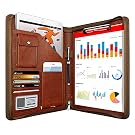
Zippered Padfolio Organizer, WRIYES Leather Planner Binder, 10.2 Inch Portfolio Folder for Documents, Letter Size Business Card Holder for Men&Women (Brown)
A professional zippered portfolio that keeps documents, notes, cards, and planning essentials together for meetings, presentations, and organized workdays.
Check PriceRelated Articles
Cash Flow Statement: How It Works and Why It Matters
A cash flow statement shows how cash moves into and out of a business during a reporting period. Learn its three sections, how to read it, and why it matters.
Read Article →How to Prepare Financial Statements for a Small Business
Learn how to prepare accurate financial statements for a small business, from organizing transactions to reviewing the final reports.
Read Article →Financial Statement Analysis: Key Ratios Explained
Learn how to analyze financial statements using key ratios to evaluate profitability, liquidity, efficiency, and financial health with confidence.
Read Article →